
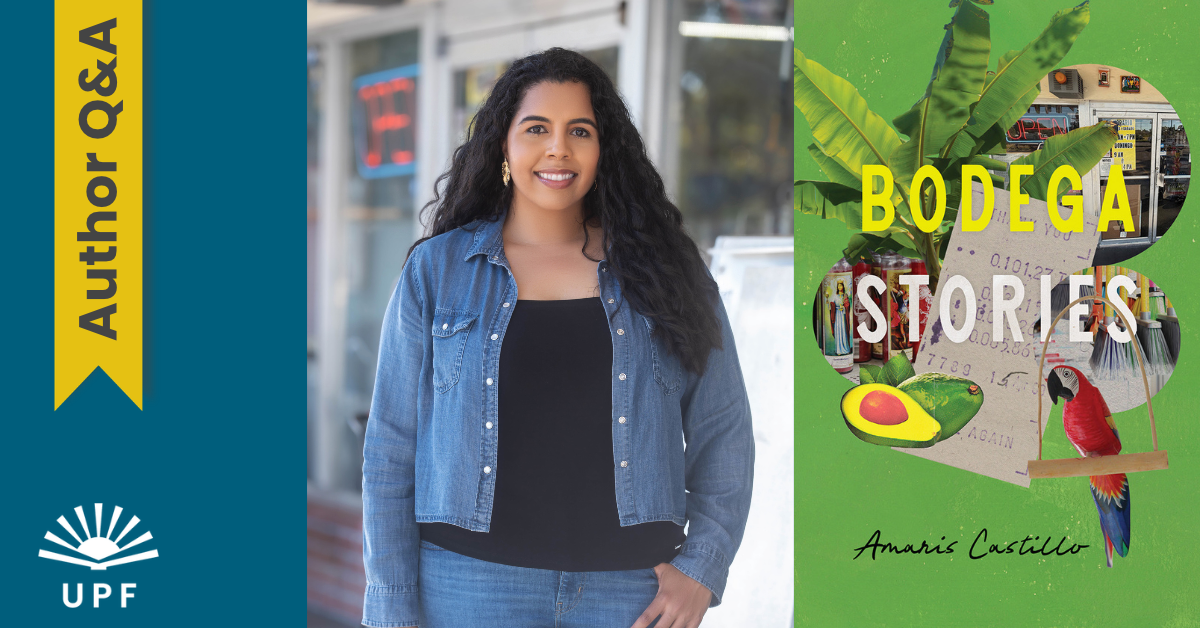
When did you know that you wanted to write this book?
The idea to write a book about my parents’ bodega had crossed my mind from time to time over the years. But I didn’t take any very serious steps until a few years ago when my editor, Stephanye Hunter, reached out to me. I looked at my parents and saw that they were both nearing retirement age and thought, ‘If I don’t do this now, I may regret it for the rest of my life.’
What do you hope readers will enjoy the most about your book?
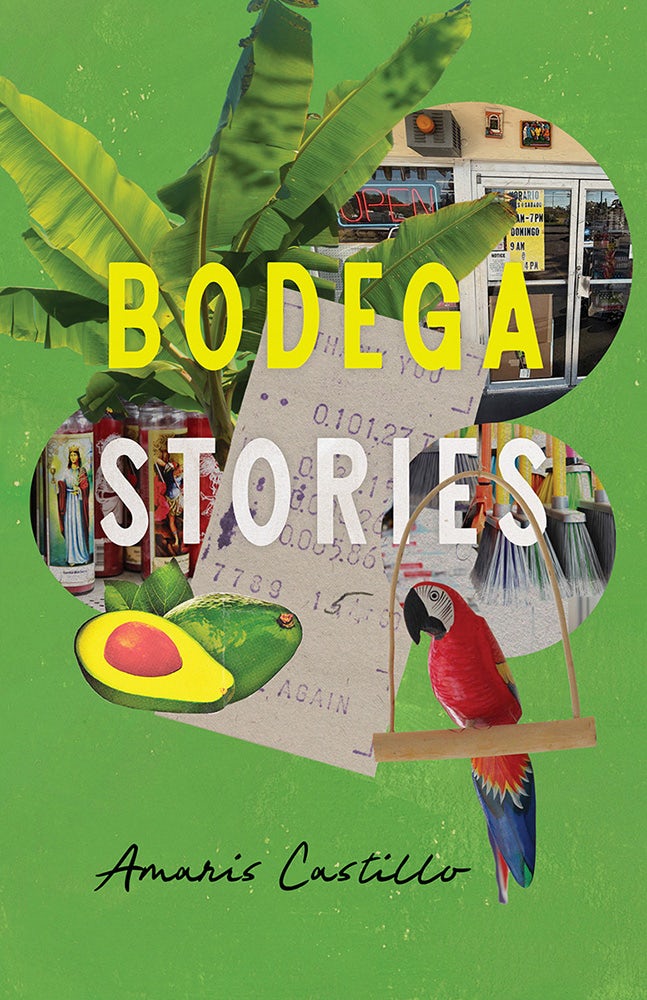
The kaleidoscopic feel of the book. Bodega Stories is very much a collage of stories, narratives, and vignettes about everyday people—many of them immigrants. I hope readers feel something, whether that’s a sense of solidarity or kinship with the book’s subjects, or another complex emotion they can’t name.
Who are your favorite authors, and how have they influenced or informed your own work?
I have quite a few, but the biggest of them are Julia Alvarez and Angie Cruz. They have contributed a great deal to the Dominican American literature canon and have inspired me to add my own voice to it. I am also a big fan of Jesmyn Ward and Tayari Jones.
What are your favorite things to eat at your family’s bodega, Orlando Latin Market?
Their arroz congrí, which is a classic Cuban dish made by cooking black beans and white rice together in the same pot. It has the perfect blend of seasonings, and it’s delicious. I also love their chicken pastelitos, or empanadas.
You organized the sections in your book by location in the bodega, from the cash register to the kitchen to the storage room. What inspired you to do this?
This idea arrived during the revision stage. I knew the book needed more structure, so it felt natural to separate the stories by sections depending on where the interview or scene took place. Readers will notice that, between each section, are the stories and vignettes of my family and occasional chapters about the bodega’s bulletin board and the Facebook requests we receive from customers. I really like the book’s final form and structure.
What are some of the biggest differences you’ve encountered between bodegas in New York and Florida?
Generally speaking, bodegas in New York and Florida vary in size. Bodegas in Florida tend to be more spacious. And of course, there are the products that differ slightly. In Orlando Latin Market, for example, you can find very niche products that Cubans love, like Royal Violets Baby Cologne.
Bodegas are being celebrated widely right now. Why do you think it’s important to highlight bodegas, and what do bodegas offer their communities that is unique and vital?
Bodegas are definitely having a moment. It’s important to highlight them because they have long served as critical lifelines for the neighborhoods they serve, and they have been major cultural hubs for different communities over time. They also provide a livelihood for bodega owners and their employees. We should all be able to make a living.
Some of the people I’ve heard you speak about from the book are Molina, the tall Cuban man who wears a sombrero, your Tia Margarita, who is a strong-willed free spirit, and Esther, who attends church every Sunday. Can you share a little about another person from the book whose story surprised you?
I really appreciated the story of Deisy, a former cashier at the bodega. She spoke with me about her cherished tattoo of the Cuba map and flag. She had the tattoo done before she fled Cuba for the United States. I was not prepared for how emotional the interview would be. I was also surprised by her complex feelings about Cuba. It’s a sentiment I have since heard from other Cubans; this feeling of loving your native country but not being able to see yourself return until a major change takes place in its government.
If you could give Orlando Latin Market a soundtrack, what would a few of the songs be?
I love this question! There are so many, but I’ll list a few here: “Un Día En Nueva York” by Los Hermanos Rosario, “Mi Tierra” by Gloria Estefan, “LA MuDANZA” by Bad Bunny, and “Vamos a Hablar Inglés” by Fefita la Grande.
How has writing this book impacted your relationship with your parents?
I think it’s brought us closer. I have always admired them, but writing Bodega Stories made me see other facets of them as people, not just as my parents. It’s a beautiful thing.
Do you have one sentence of advice for new authors?
Dare to believe in yourself and your work, and keep going.
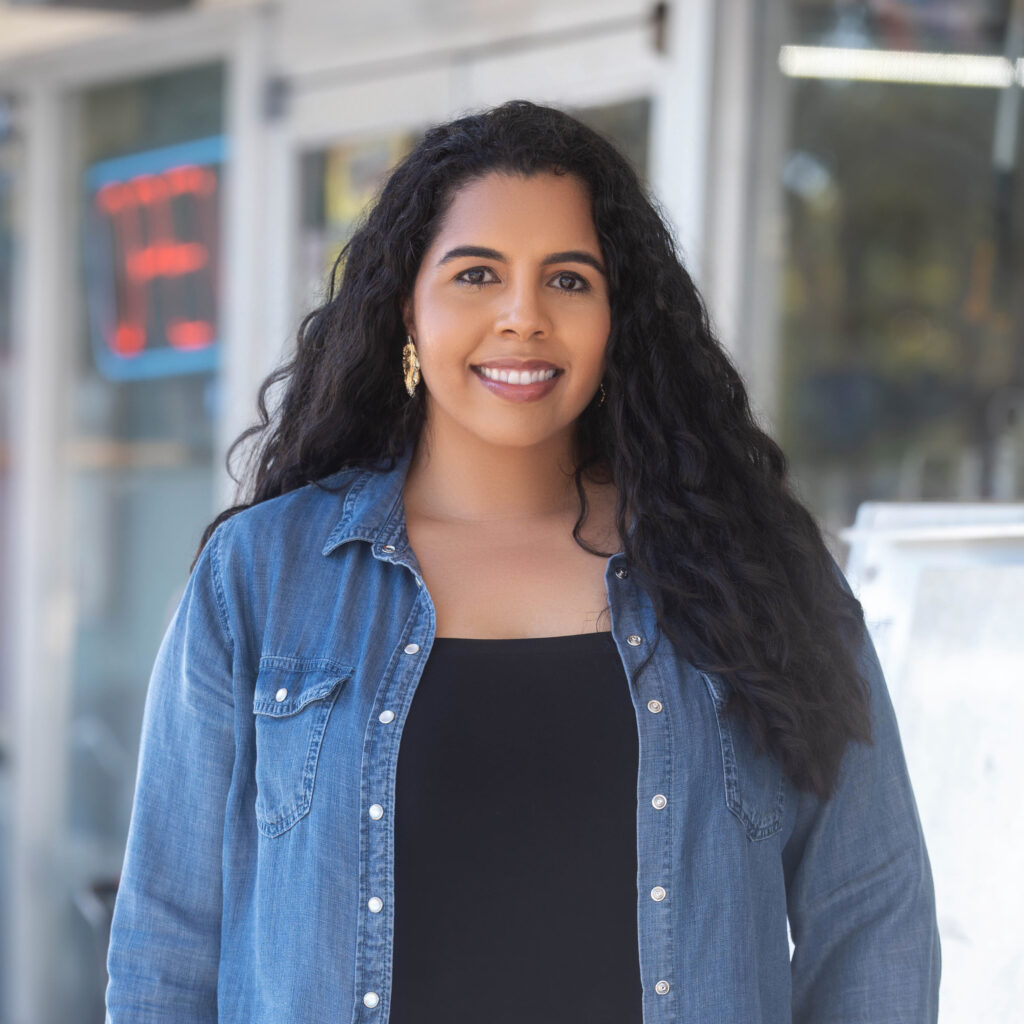
Amaris Castillo is a Brooklyn native and daughter of Dominican immigrants. A former newspaper reporter, her work has appeared in the New York Times, Lowell Sun, Bradenton Herald, and elsewhere. She currently works at the Poynter Institute for Media Studies and lives in the Tampa Bay area with her family. Bodega Stories is her debut.