
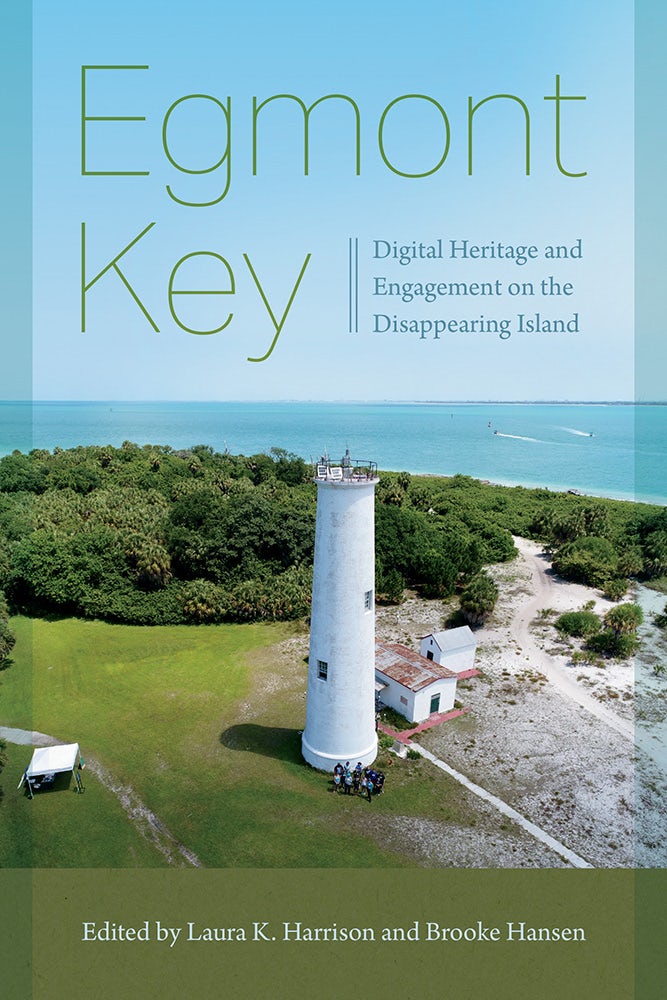
Written by Brooke Hansen and Laura K. Harrison, authors of Egmont Key: Digital Heritage and Engagement on the Disappearing Island.
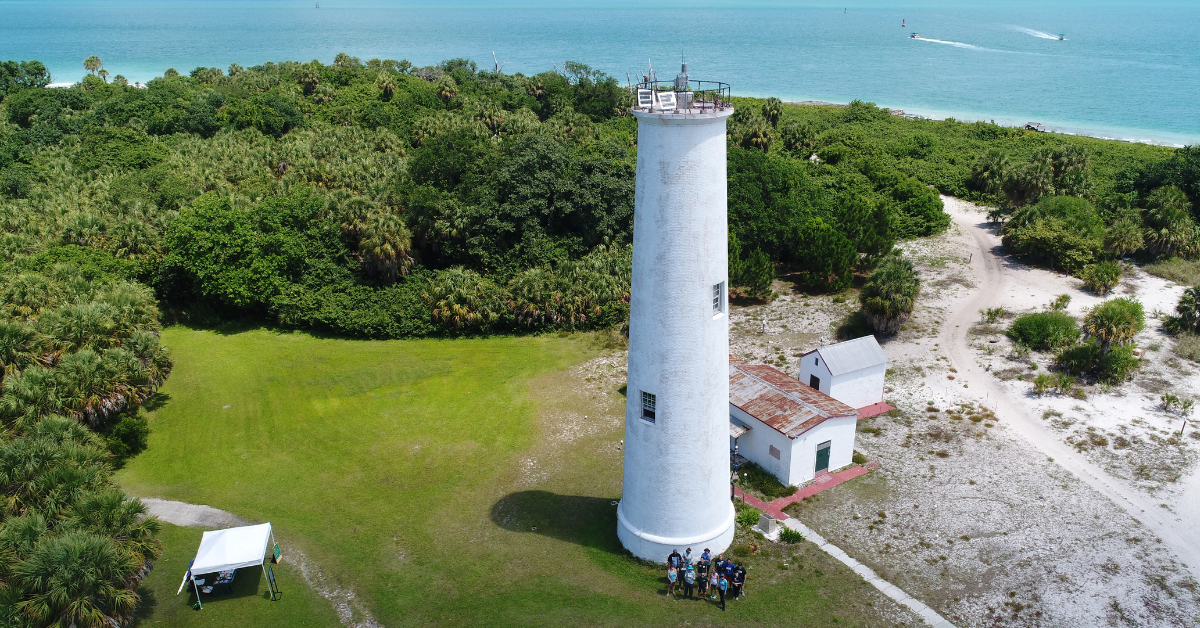
From the beaches of Fort De Soto, Florida, Egmont Key looks deceptively peaceful. The low island sits at the mouth of Tampa Bay, marked by its historic lighthouse and framed by powder blue waters that turn turquoise on the Gulf side. Today, visitors arrive by ferry or private boat to swim, snorkel, walk among the ruins, and perhaps catch sight of a gopher tortoise wandering through the brush. Little do they know about the famous people, tragedies, and dramatic events associated with this small island.
Egmont Key’s allure has continually pulled visitors in for centuries. Early times were punctuated by Indigenous presence, followed by Spanish conquistadors and a parade of others seeking to claim and name the prime military real estate to build their empires. The English stamp stuck and the name Egmont, after John Perceval the Second Earl of Egmont, remains to this day.
As the island was battered by great gales that brought feet of water, trodden upon by many thousands of visitors, and pulled into wars that raged on the mainland, some notable figures became associated with it. Paul Revere did an engraving of the island. Robert E. Lee was an early scout documenting its advantageous military positioning (although later as the Confederate general in the Civil War he could not hold the island and the Union controlled it, harboring salt-making escapees from enslavement). The iconic founder of the American Red Cross, Clara Barton, was quarantined there during the yellow fever outbreak in 1898. Around that same time, Teddy Roosevelt’s Rough Riders prepared for deployment to Cuba from their base in Tampa, and it is rumored that he camped at Egmont Key (although we could find no documentary evidence to confirm this). That’s a lot of history for an unassuming little island.
Perhaps the island’s most consequential visitors were the Seminoles brought to Egmont Key during the Seminole War. From 1856 to 1858, the US military began using the island as a detention site for Seminoles captured in Florida before their forced removal west. Among them were some of the best-known figures in Seminole history, including Billy Bowlegs. Families were confined on the mosquito-ridden island while the military prepared to transport them west from Florida to Indian Country in Oklahoma.
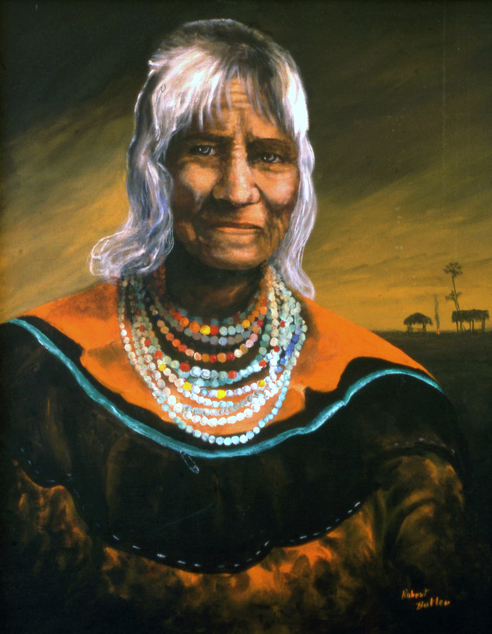
One of the most remarkable stories associated with this period belongs to Polly Parker (Emateloye), a Seminole woman of the Bird Clan who was among those removed from Egmont Key in 1858. During the journey west, she escaped and made her way back to South Florida. She went on to live a long life and had many children; it is said that at least 20% of all Florida Seminoles can trace descent from Polly Parker. Parker is a major heroine who shaped Egmont Key and Florida history to the present day.
By the late nineteenth century, Egmont Key’s strategic importance brought another wave of residents, most of whom remain nameless and faceless to us today. During the Spanish-American War era, the island became home to Fort Dade, a bustling small town, complete with military batteries, brick roads, residences, a hospital, a movie theater, tennis courts, and other amenities. One man’s story from the Fort Dade period emerged from some deep archival research: a bugler-turned-baker who made bread in the bakery. All that remains of this bakery is a pile of rubble in Ghost Town. The baker’s name was Julius Tiedchen. He was stationed on the island and later married Frances Sara Jett, a resident of nearby St. Petersburg whose father ran a local bakery on Central Ave. Later, Julius served in World War II’s Pacific Theater. Though he isn’t a famous figure, Julius’s story is an example of the hundreds of people whose individual lives made up the deep and colorful history of Egmont Key during this period.
Over time, the bustling community disappeared. Fort Dade was deactivated, buildings were abandoned or dismantled, and nature began reclaiming the island. Some structures collapsed. Others were swallowed by vegetation or lost to erosion. Brick roads now lead visitors through a landscape where ruins appear unexpectedly among palm trees and sea grapes.
It is tempting to think of the island only in terms of its lighthouse, beaches, wildlife, and evocative ruins. Yet Egmont Key has also been a place of confinement and forced removal, military power and strategey, and resilience and reinvention. Its history contains survivors, soldiers, celebrities, and more than a few colorful characters.
Fame and infamy have both washed ashore on Egmont Key. The challenge now is making sure their stories do not wash away.

Laura K. Harrison, principal of Archeo Consulting, and former director of Access 3D Lab at the University of South Florida, is coeditor of The Early Bronze Age in Western Anatolia.

Brooke Hansen, director of the Hospitality and Tourism Management Program in the Muma College of Business at the University of South Florida, is the author of Sustainable Tourism and Hospitality Management: Business Practices, Global Platforms, and Reporting.
Cover image: Aerial photo of the Egmont Key lighthouse, showing the 1858 structure at the north end of the island surrounded by foliage and the sea. A research team stands at the base of the lighthouse. The photo was taken in May, 2019. Credit: Mel Rodgers