

When did you know that you wanted to write this book? What led you to this subject?
I’ve long been aware of the danger of climate change, but this understanding deepened while I was researching and writing my previous book for UPF, Drying Up: The Fresh Water Crisis in Florida. For one thing, I realized that sea level rise was already damaging the state’s water supply by encroaching on the coastlines and rising up beneath the peninsula.
After I queried UPF with a proposal for a Florida-specific book on climate change, the editorial staff suggested that instead I include the American South, not just Florida. So, that’s what I did.
What do you hope readers will enjoy the most about your book?
Above all, I hope they find it interesting, convincing, and readable. I tried to avoid scholarly language and instead used more engaging, accessible language.
Who are your favorite authors, and how have they influenced or informed your own work?
I’m an eclectic reader. I like highly skilled fiction authors such as John le Carré, Hilary Mantel, and Thomas Wolfe. As for nonfiction, I admire almost anything written by Erik Larsen, David Grann, and Naomi Klein. And, of course, I am impressed by two of the best writers on climate change for the general public, Bill McKibben and Elizabeth Kolbert.
What do you think people in other areas of the world, not just the American South, can learn from this book?
They can learn from the example of Virginia and other southern states that have taken action for climate justice. So far, Virginia, along with North Carolina, Louisiana, and more recently, South Carolina, are the only southern states with a comprehensive state climate plan that includes resiliency, mitigation, greenhouse gas reduction, and climate justice efforts.
It’s at the community level in the South where you will find concerned citizens doing what they can to combat climate change. The city of Norfolk, Virginia, for instance, has implemented a comprehensive plan that includes sustainability concepts from experts in the Netherlands to revamp its landscape, infrastructure, and economy to “live with a rising sea” instead of resisting it.
There are also insights to be gained from Atlanta-based Georgia Interfaith Power & Light (GIPL), a faith-based organization that, among other things, helps congregations across Georgia break away from fossil fuels and set up solar panels at their churches instead.
Down in southwest Florida, meanwhile, Babcock Ranch, a town built on sustainability principles and perhaps the first 100% solar powered town in America, draws journalists, government officials, and even developers from around the world to see how the Floridians did it.
Yes, these are the people that those outside the American South need to know about.
What has writing this book taught you about the power of community and grassroots movements?
It confirmed what I’d already learned as an environmental activist: a handful of dedicated people can accomplish much. Here in Marion County, Florida for instance, a group of activists led the effort to save a huge tract of forest land from development and have it turned into a state park instead. It became known as the Silver River State Park, which was later combined with the former Silver Springs attraction to create a state showcase, Silver Springs State Park.
Activists were also able to convince Tallahassee to buy up properties lying outside the park because they were springs-recharge areas. Today, they remain protected woodlands.
Again, local activists stopped another huge development project from happening in a wild area in our county. That land today is the Indian Lake State Forest.
If we show up at City Hall informed, determined, and organized, we can often accomplish great things.
This book profiles Southern climate activists as well as those working against them. Why do you feel it is important to include both?
To bring about change in the status quo, you first must know what you are up against. Scientists told me denialism is by far the biggest obstacle to climate action.
Everyone should understand the unfolding disruptions caused by climate change will render huge financial costs, altered landscapes, mass migration of people and other life forms, extinctions, eroding infrastructures, and massive economic and commercial changes.
An example of acknowledging the problems we face is one of the organizations I highlight in my book, The Southeast Florida Regional Climate Change Compact, comprised of Broward County, Miami-Dade County, Monroe County, Palm Beach County and 108 cities and towns. The compact’s goal is:
to guide and influence all levels of government to adapt to climate impacts, reduce greenhouse gas emissions, and build community and economic resilience.
How has writing this book made you hopeful about climate change solutions?
I hope my book helps sound the alarm to take climate action. We need all the help we can summon.
Wherever readers may live, however, they should not despair. That’s because there are concrete efforts that readers can take in their local communities to reduce emissions, lessen the damage of climate change, and fortify their communities and homes. They can find inspiration in the South. As I write in my book,
hundreds of thousands of southerners for many reasons keep showing up to lend a hand. Across the region, they are restoring coral reefs, mangroves, oyster beds and native habitats, removing exotic plants, protecting coastal areas, swamps, rivers and springs, monitoring wildlife and water quality, planting trees and community gardens to mitigate urban heat, helping authorities with disaster response preparedness hurricane recovery, and doing what they can to advance climate justice.
Do you have one sentence of advice for new authors?
I have one paragraph instead:
Most professional writers that I have ever talked to had one quality in common: that is, they had a compunction to write. Those wanting to write should ask themselves if they, too, have this urge. Also, develop a tough hide. When you project your ideas into the public sphere, you can expect both praise and punishment.
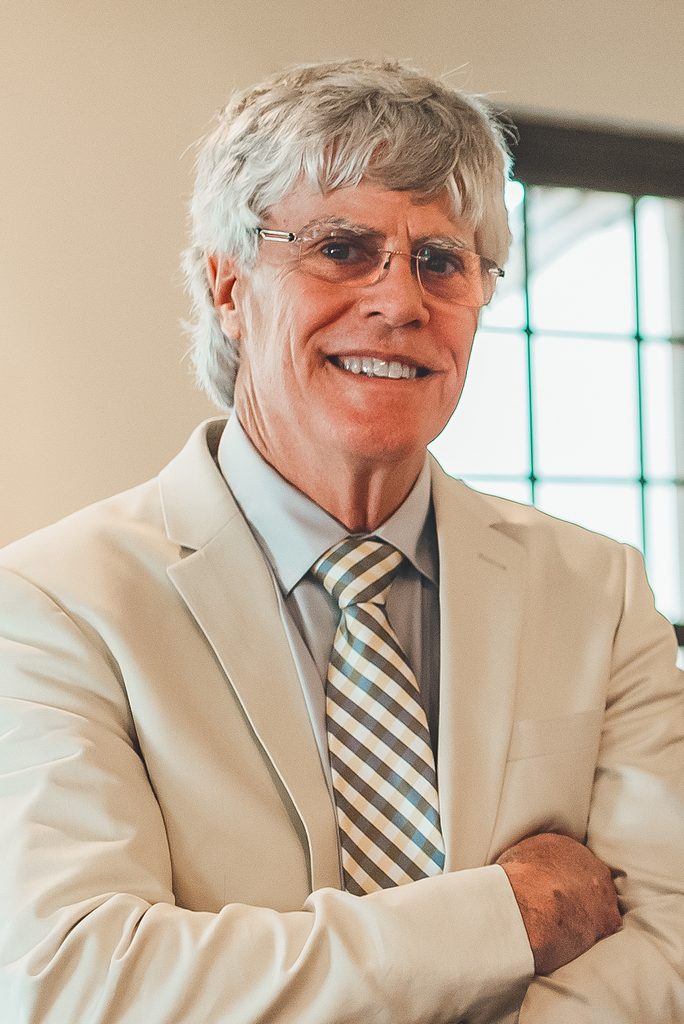
John M. Dunn is a journalist, educator, and environmental advocate. He is the author of several books, including Drying Up: The Fresh Water Crisis in Florida, winner of the Florida Historical Society Stetson Kennedy Award and the Florida Book Awards Bronze Medal for Florida Nonfiction.