
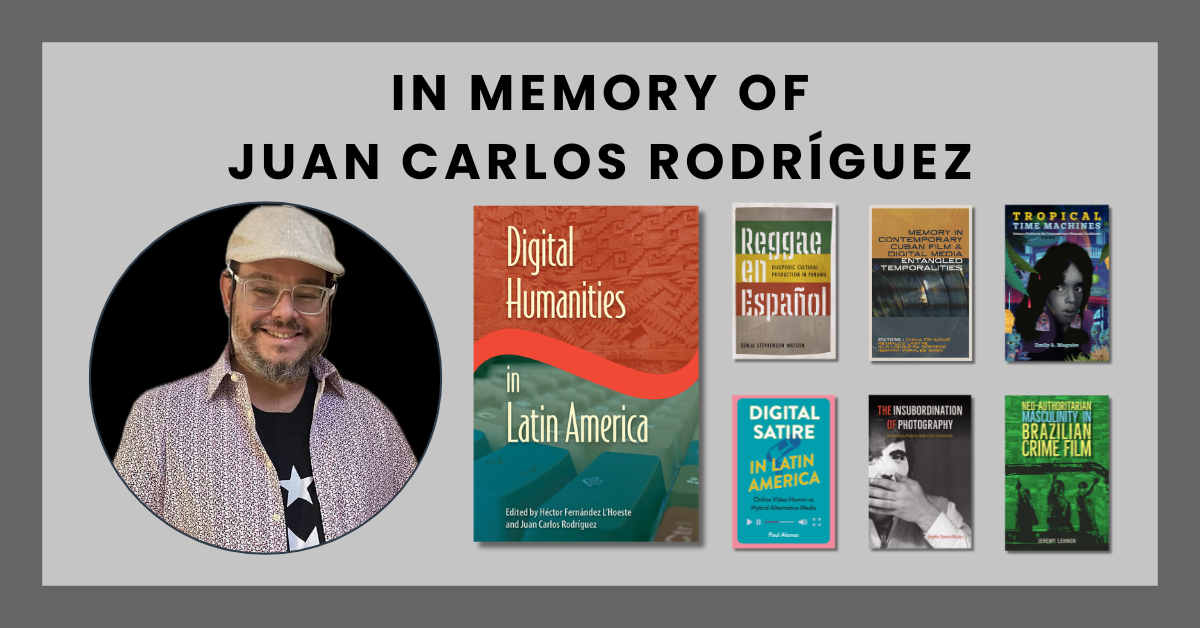
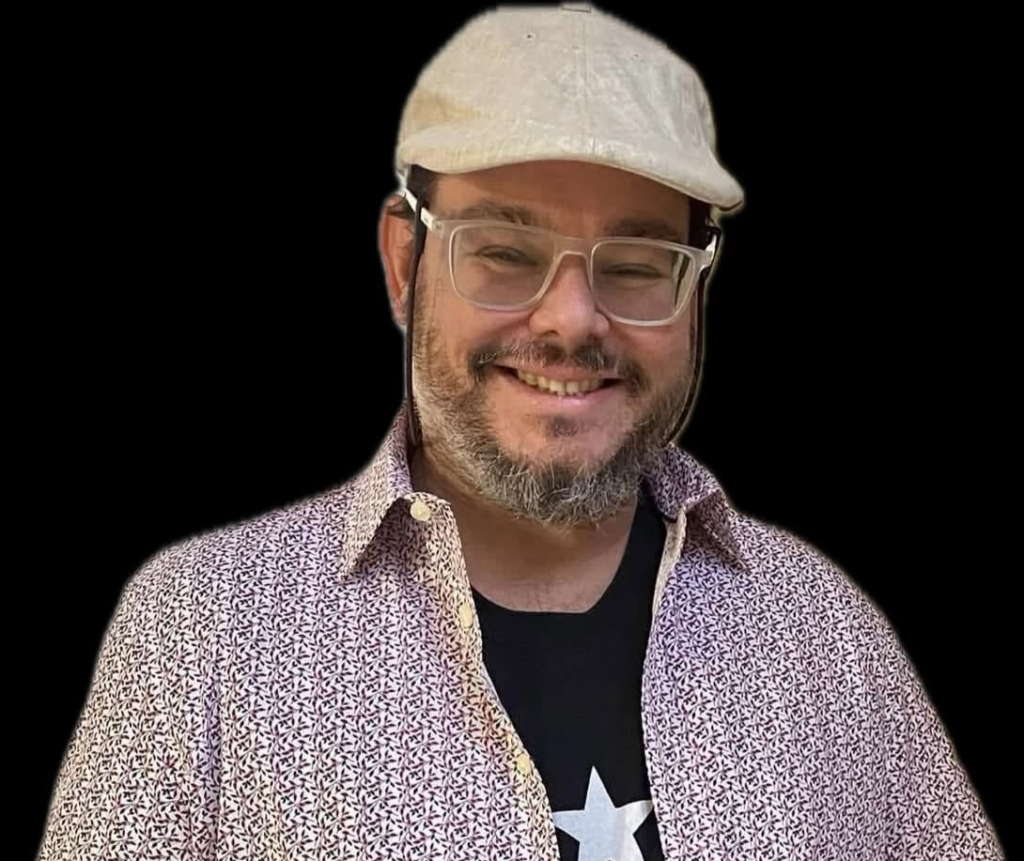
We are saddened to share that Juan Carlos Rodríguez, UF Press series editor and author, has passed away.
Rodríguez was coeditor, alongside Héctor Fernández L’Hoeste, of the UF Press series Reframing Media, Technology, and Culture in Latin/o America. This series explores how Latin American and Latino audiovisual, musical, and graphic cultural practices reframe and reconfigure social, economic, and political discourses at a local, national, and global level.
Under his guidance, the series has published a variety of books that critically examine Latin American media studies, with books focused on subjects ranging from music genres such as reggae en español, to Cuban, Brazilian, and Central American film, to print media and periodicals. The series has published eighteen books to date.
Rodríguez was also coeditor, with Héctor Fernández L’Hoeste, of the essay collection Digital Humanities in Latin America, published by UF Press in 2020, as well as coeditor of New Documentaries in Latin America published by Palgrave Macmillan in 2014.
Rodríguez was associate professor of Spanish at the Georgia Institute of Technology and codirector of the Atlanta Global Studies Center. His research interests included Latin American documentaries studied through the lenses of sustainability, critical theory, urban and environmental studies, and digital humanities. His feature-length documentary, Vieques: A Living Archive, incorporates video interviews with inhabitants of the island of Vieques in Puerto Rico before and after American demilitarization of the island.
Tributes from Friends of the Press
“Juan Carlos Rodríguez was one of the two founding editors for UF Press’s Reframing Media, Technology, and Culture in Latin/o America series, which was established in 2015. For over a decade, I have had the privilege of working with Juan Carlos and co-editor Hector Fernandez L’Hoeste to develop this series. A brilliant scholar, Juan Carlos also had a special warmth and kindness; he didn’t just recruit projects to the series but welcomed scholars, offering engaging questions and thoughtful feedback on their work. I had the pleasure of meeting with Juan Carlos and Hector regularly on Friday afternoons to discuss projects under consideration and in development for the series. Updating us on his family first, his wife Cynthia and his son Gustavo, both of whom he clearly adored, Juan Carlos was always excited to discuss projects. He was a patient and insightful interlocutor, eager to hear my opinions and to engage in conversation with me and Hector as we determined how to move forward with each project. I learned so much from working with Juan Carlos, and I am incredibly grateful for his guidance in shaping the Reframing Media series. Every book we have published bears his fingerprints, and his influence will continue to be felt for years to come.”
—Stephanye Hunter, editor-in-chief, University of Florida Press
“Knowing Juan was knowing a piece of Puerto Rico—actually, a rather sizeable piece, thanks to his lively personality. I think he would have agreed to be defined, first and foremost, as a proud Boricua, with everything this entails: the colonial experience, the love for the Caribbean, the joy of its people, the craving for a well-prepared and seasoned dish of rice and beans, the melodies and rhythms of the music, record-length Christmas holidays, the trade winds, the smell of rain about to fall, and a vast, surrounding ocean. Above all, knowing Juan meant valuing two things highly: the importance of family and friends (as understood by Boricuas) and the beauty and sound of the language (and I’m talking about Puerto Rican Spanish, which the world has discovered—thanks to Bad Bunny—is a world unto itself). Juan was one of the kindest and most genuine people I have ever known. This trait was certainly not a matter of ingenuousness; he was fiercely intelligent. It was merely a consequence of his intellect, which touched all of us. I never heard him say anything mean about anyone (which should not be misread as a lack of critical capability). It was my privilege to call him my friend. He will be greatly missed and fondly remembered by all who knew and loved him. Descansa en paz, mi buen amigo.”
—Héctor Fernández L’Hoeste, professor, Department of World Languages and Cultures, Georgia State University, and coeditor, with Juan Carlos Rodríguez, of Digital Humanities in Latin America

“Juan Carlos Rodríguez was a brilliant scholar, filmmaker, poet, and photographer whose work reshaped how we think about image, memory, resistance, and the Caribbean. As co-editor of the Reframing Media, Technology, and Culture in Latin/o America series, he championed interdisciplinary and emerging scholarship with rare generosity, believing in projects — and people —long before others did. His twenty-year documentary, Vieques: Archivo vivo, recently earned him the Magnum Foundation’s Photography Expanded Fellowship, recognition for a body of work that resurrected silenced histories and centered voices too often left out of the record. He mentored and championed countless colleagues, myself included, pairing genuine encouragement with honest, rigorous critique. The field has lost one of its most attentive and generous minds. I have lost a trusted mentor and a dear friend.”
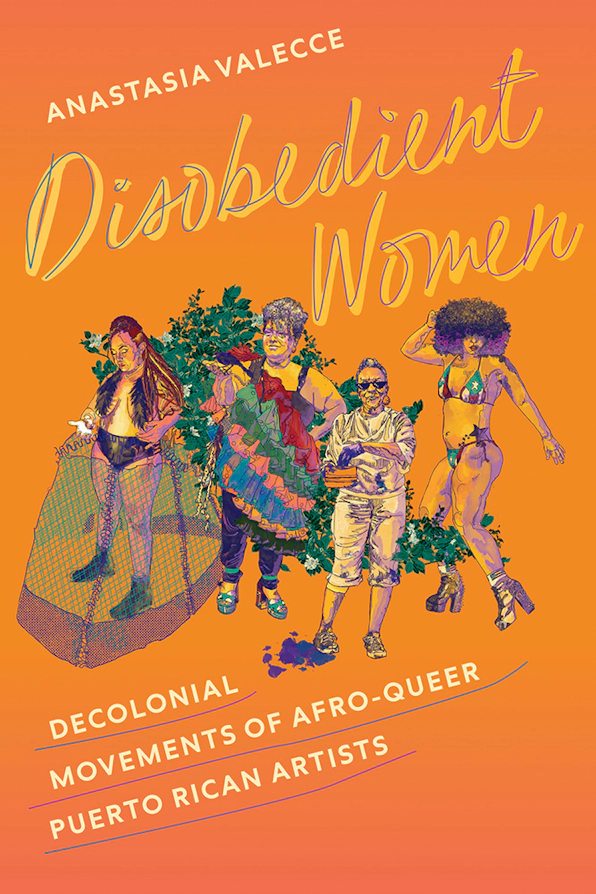
—Anastasia Valecce, associate professor of Spanish, Spelman College, and author of Disobedient Women: Decolonial Movements of Afro-Queer Puerto Rican Artists
“Juan Carlos Rodríguez was one of the kindest, most brilliant, and inspiring scholars I have ever had the privilege of knowing. He was always generous with his time and support, especially toward those of us who are at the beginning of our academic journeys. I will always remember him with deep admiration and affection.”
—Isdanny Morales Sosa, PhD candidate in Latin American Studies, Tulane University, and coeditor, with Dunja Fehimovic, Reynaldo Lastre, and Nils Longueira Borrego, of Memory in Contemporary Cuban Film and Digital Media: Entangled Temporalities

“I first spoke with Juan Carlos Rodríguez during the pandemic. I remember that my advisors at the University of Connecticut encouraged me to reach out to him about my ongoing research on nuclear technology and cultural production in Cuba. I thought I would take only ten minutes of his time, but our conversation lasted nearly two hours.
After that, we began collaborating on conferences, publications, and other shared projects. He was incredibly generous when I invited him to the College of the Holy Cross to speak about his documentary, Vieques: A Living Archives, and my students kept returning to the discussion of ‘la isla nena’ throughout the semester, deeply influenced by the ideas he shared during our Q&A.
One of my last memories with him is from Tulane University, where he spoke to me about his trips to Cuba and his friendships with filmmakers and critics on the island. In a context impacted by limited publishing opportunities and the scarcity of cultural studies and contemporary theory books in Cuba, Juan Carlos was one of the people who championed the idea of filling personal computers with virtual libraries that he carefully assembled before those trips.
His knowledge of Caribbean culture, his remarkably encyclopedic mind, his tireless commitment to creating new projects, and his generosity toward younger generations of scholars made Juan Carlos one of the most radiant people I have ever met in academic and intellectual circles. Knowing that we will no longer have his presence among us feels profoundly unjust, almost like a betrayal of fate. I can only hope that, wherever he has gone, he will receive all the generosity he gave to others and find the peace and happiness he deserved.”
—Reynaldo Lastre, visiting assistant professor, College of the Holy Cross, and coeditor, with Dunja Fehimovic, Nils Longueira Borrego, and Isdanny Morales Sosa, of Memory in Contemporary Cuban Film and Digital Media: Entangled Temporalities
“I met Juan Carlos at SCMS in Chicago in 2013. It was one of my first international conferences as a PhD student, and he was then accepting contributions for his wonderful co-edited volume New Documentaries in Latin American Cinema. I published my first English-language chapter in that book.Our paths crossed many more times at conferences and film festivals. A conversation with Juanca always felt like a warm breeze. He studied film and politics with intellectual rigor, yet understood knowledge from an affective, grounded, and humble perspective. His work was the epitome of research-creation, and it will continue to inspire those of us who believe scholarship, activism, and artistic practice belong together.
The last time we saw each other was at a conference in December. Attendees had the privilege of watching his extraordinary documentary, Vieques archivo vivo, the result of decades of research and community work on the island. It was an unforgettable screening and discussion. We had lunch, listened to jazz with good friends, and talked about films, family, politics, and Bad Bunny.
Juan Carlos was a star, and I don’t think he realized it, because he was always busy helping others, collaborating generously, and trailblazing across multiple cultural fields. He was an academic, poet, musician, filmmaker, activist, and devoted husband and father. Colleagues across generations were in awe of him. His passing leaves a huge void in the Caribbean film community. I will forever remember his passion for cinema, his love for Puerto Rico and Cuba, and, above all, his humanity.”
—Zaira Zarza, associate professor, Department of Art History, Film and Audiovisual Media, University of Montreal