
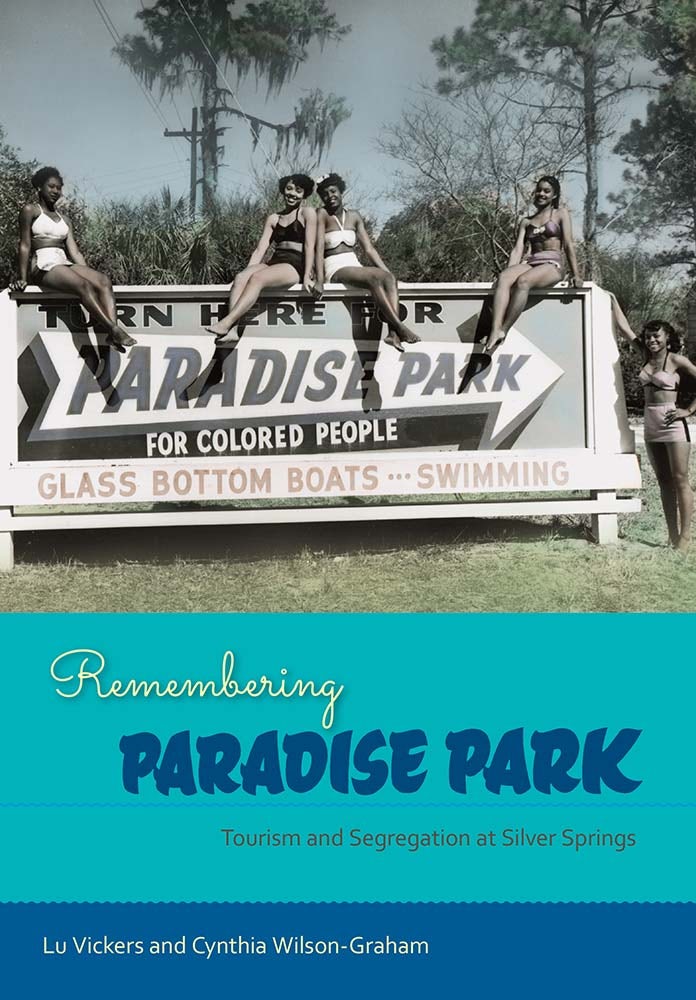
Written by Lu Vickers, coauthor (with Cynthia Wilson-Graham) of Remembering Paradise Park: Tourism and Segregation at Silver Springs.
I flew to Wichita, Kansas, to dive into Florida’s Paradise Park, the tourist attraction for African Americans and the counterpart to Silver Springs, via Safer Waters: Picturing Black Recreation at Midcentury, the latest exhibit by award-winning artist Stephen Towns. The Wichita Art Museum paired Towns’s stunning art with some of photographer Bruce Mozert’s vintage black and white Paradise Park photos. Towns’s quilts and paintings explode with color, sparkles, sound, and joy.
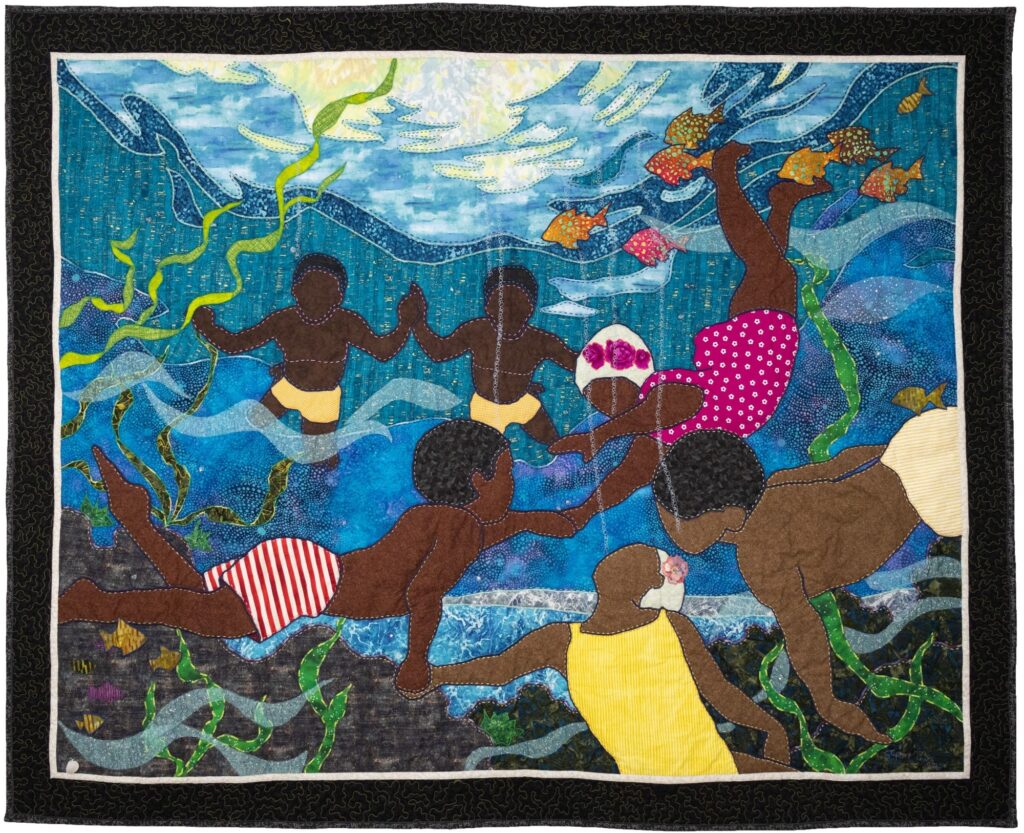
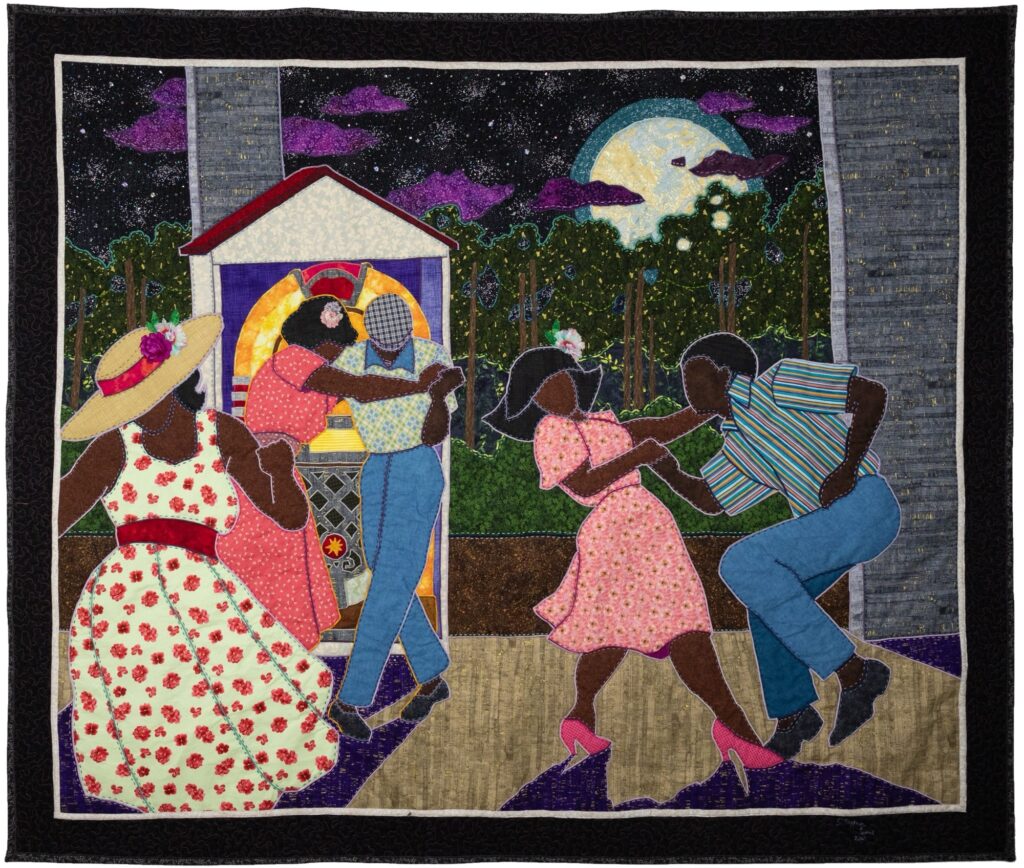
A juke box—one of Paradise Park’s most treasured features—is surrounded by exuberant dancers; a Miss Paradise Park Beauty Queen stands glorious under a starry sky after her Labor Day crowning. One of my favorite quilts, “All We Knew Was Joy,” depicts a group of children holding hands underwater, bubbles rising above them. This quilt is particularly touching when one remembers that Black children often had no place to swim legally during the Jim Crow era. As Bill Maxwell, the noted Tampa Bay Times (formerly St. Petersburg Times) columnist once told me, “We had to find places to sneak into the Atlantic Ocean.” At Paradise Park, children were protected from the fact of segregation. All they knew there was joy—they were surrounded by family and friends and could swim to their hearts’ content.
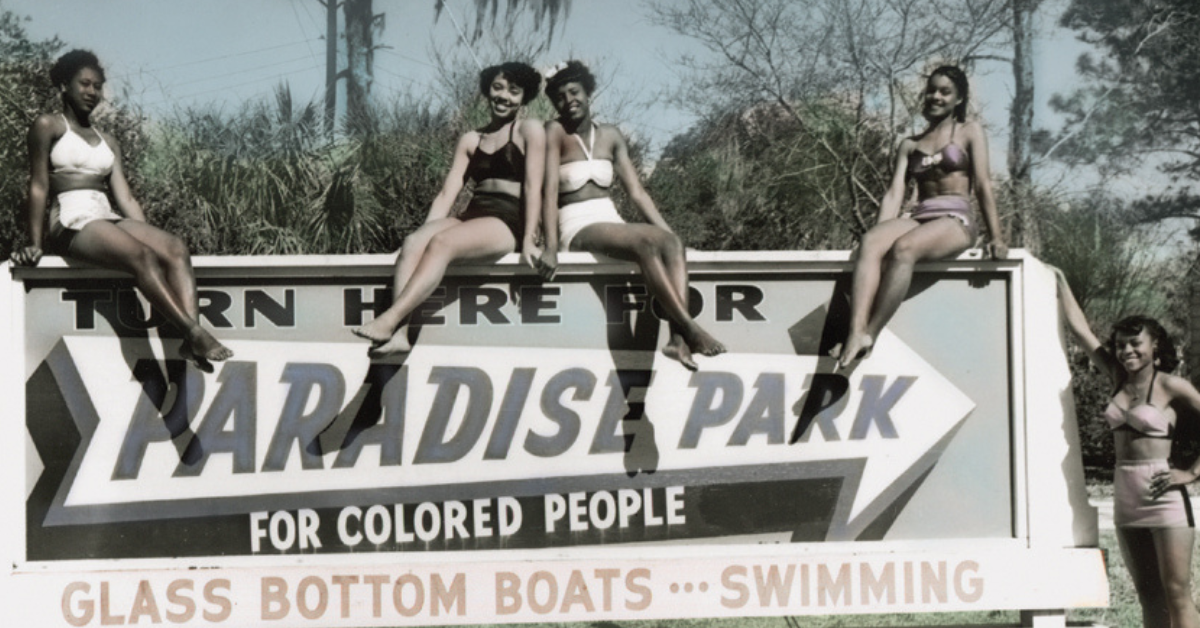
Towns’s richly textured quilts and paintings were inspired by those 1950s-era photos of African Americans made by Mozert at Paradise Park. Mozert arrived in Florida in 1938 for a fashion shoot in Miami but took a detour to Ocala when he heard Johnny Weissmuller was filming a Tarzan movie at Silver Springs. While Mozert photographed Tarzan, he fell in love with the springs. He created an apparatus that enabled him to take photos while submerged underwater and began a thirty-plus-year career staging the kitschy underwater scenes with models that made both him and Silver Springs famous.
In 1949, Mozert began a new photography project when the owners of Silver Springs opened Paradise Park downriver to accommodate their Black boat captains who could work at Silver Springs—but who couldn’t take their own families out on the boats.
I came across those photos twenty years ago when visiting Mozert while researching a book about Weeki Wachee. The photographs were loosely gathered in a rubber band, propped on a ledge in his cluttered studio. I thumbed through the images: photos of beautiful women in their stylish swimsuits, families enjoying picnics, children laughing and playing in the water, churchgoers being baptized. The images stayed with me. Two books later, I began interviewing the friends and family of Eddie Leroy Vereen, the former Silver Springs boat captain who shaped Paradise Park into an oasis that welcomed people from all over the country.
Towns encountered Mozert’s Paradise Park photos much more deliberately. His work has long been informed by the often-buried histories of African Americans—ranging from Nat Turner’s rebellion to Harriet Tubman’s Combahee River Raid in South Carolina, Towns’s home state. After completing Declaration and Resistance, a series that honored Black labor after Emancipation, Towns began researching recreation during segregation and Mozert’s photos of Paradise Park “kept popping up.” Speaking to an audience at the Rockwell Museum in Corning, New York, Towns said of his upcoming Paradise Park project at that museum, “it’s going to be bright; it’s going to be beautiful; it’s going to be happy; it’s going to be love; it’s going to be joy.” And the exhibit in Wichita was all those things and more.
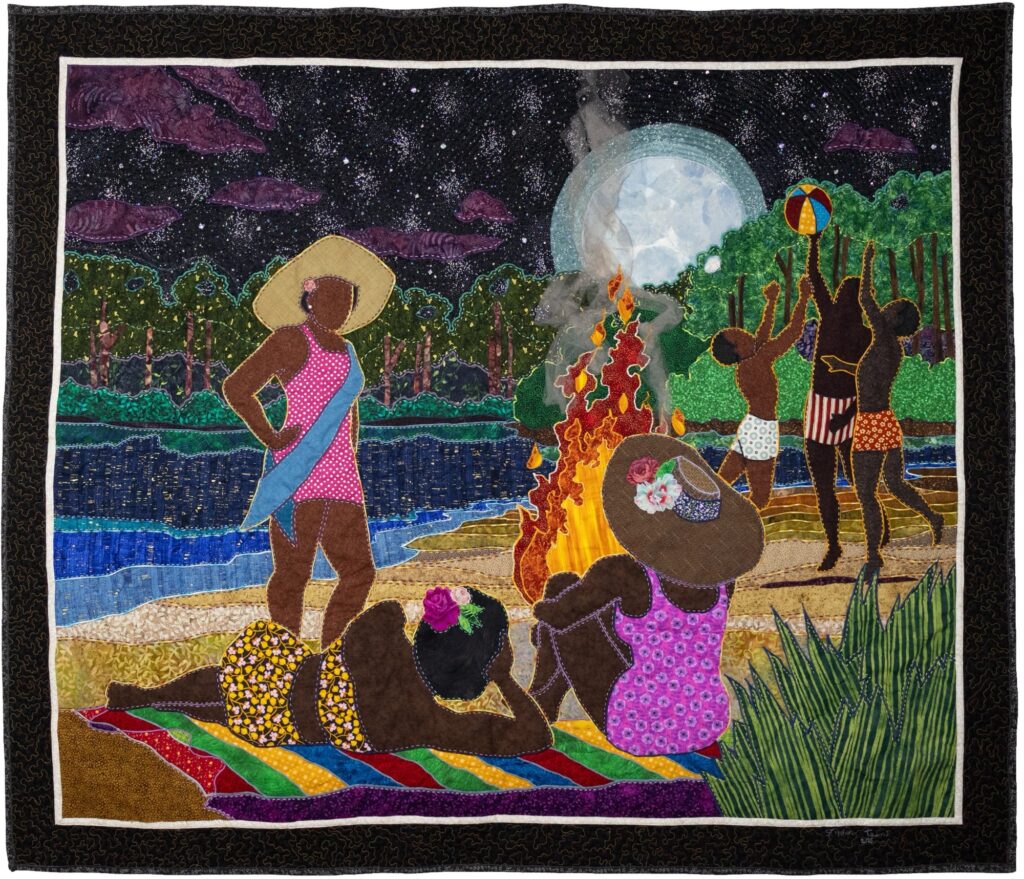
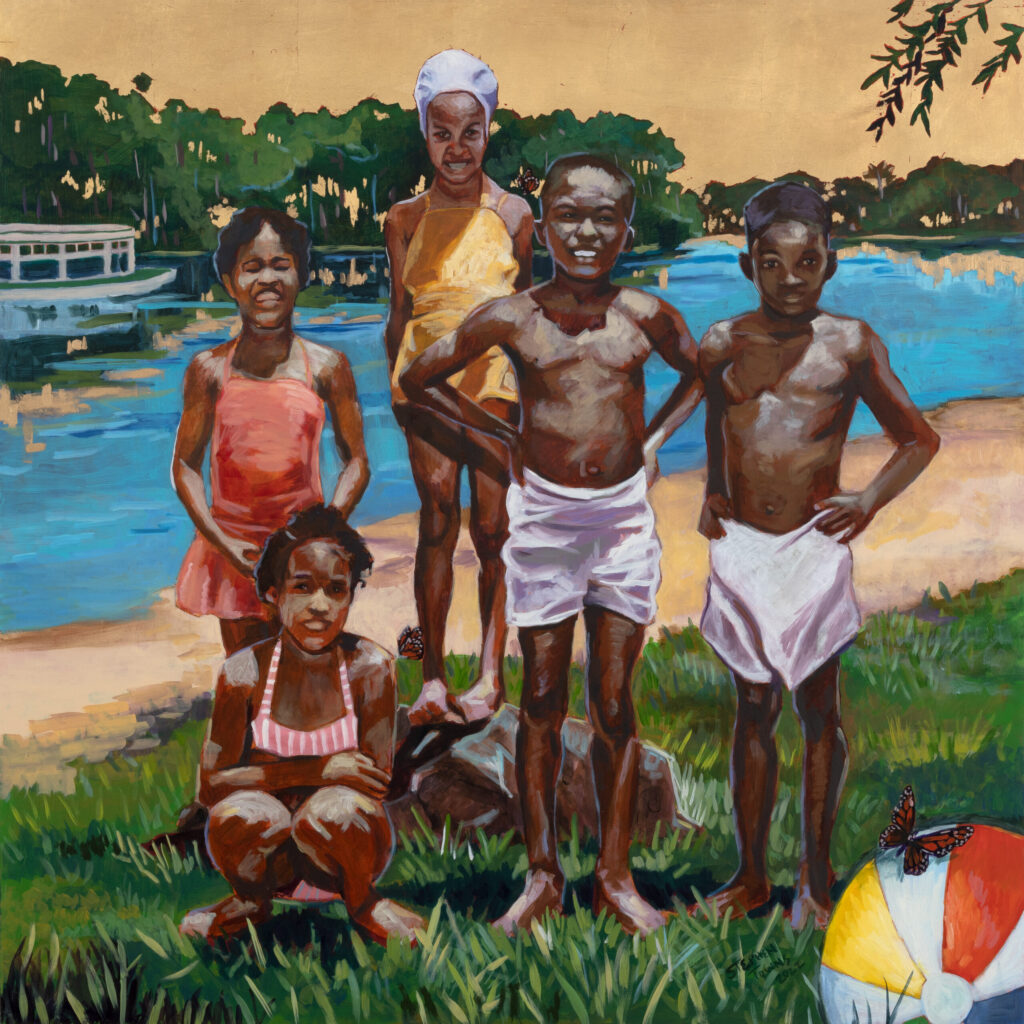
Although Paradise Park closed in 1968 and its physical structures were bulldozed into rubble, the memories remain vivid in people’s minds and in the stories they tell today. With Safer Waters, Towns has resurrected Paradise Park. With needle and thread and glass beads and scraps of beautiful cloth, he has summoned the beauty queens back together for one more jubilant walk across the stage. He has popped a quarter into the juke box and gathered the teenagers for a dance-off to Rufus Thomas’s hit “Walking the Dog.” With gold leaf and paint and monarch butterflies, he has called the children back onto the sandy banks of the cool Silver River, their laughter ringing through the air.
In the presence of these living works of art, I can’t help but hear Reginald Lewis telling me how his grandfather Eddie Vereen poured his heart and soul into the park; I can’t help but hear Earl Glover, whose father James handled snakes there, telling me that when people walked through the gates at Paradise Park they became family no matter where they were from.
In the presence of these paintings and these quilts, their stories so lovingly and beautifully imagined, I can’t help but believe that Stephen Towns has conjured a future for Paradise Park.
Lu Vickers is the author of Cypress Gardens, America’s Tropical Wonderland: How Dick Pope Invented Florida; coauthor (with Bonnie Georgiadis) of Weeki Wachee Mermaids: Thirty Years of Underwater Photography; and coauthor (with Cynthia Wilson-Graham) of Remembering Paradise Park: Tourism and Segregation at Silver Springs.